
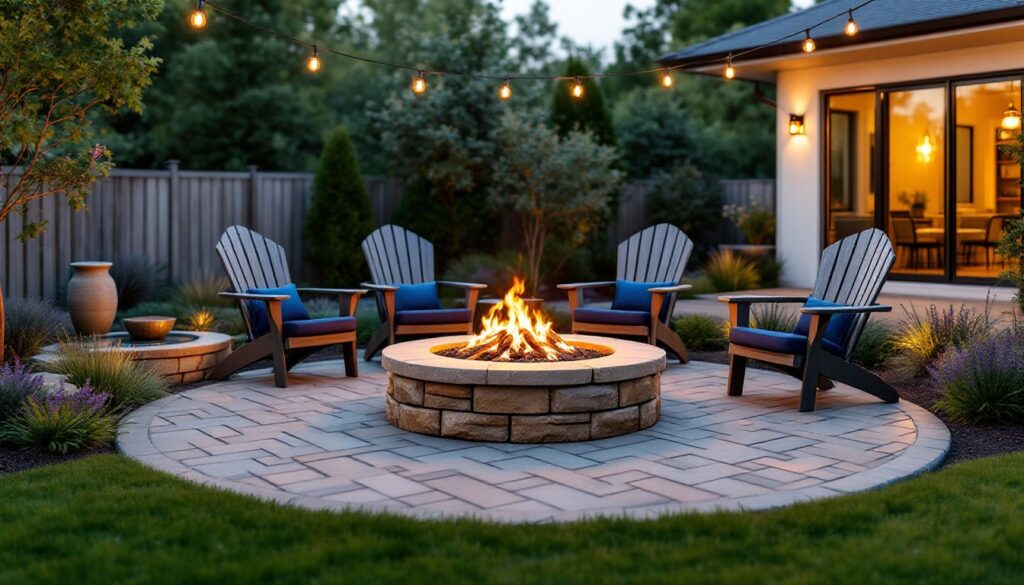
A firepit patio extends the usable square footage of a home well into fall and even mild winter evenings, creating a natural gathering spot that pulls people away from screens and into conversation. Building one isn’t complicated, but thoughtful decisions about placement, materials, and layout will determine whether it becomes the centerpiece of a backyard or an underused afterthought. This guide walks through the practical considerations, from selecting the right firepit type to navigating clearance requirements, so homeowners can design a space that’s both functional and inviting.
Table of Contents
ToggleKey Takeaways
- Firepit patio ideas thrive when you choose the right fuel type—wood-burning for ambiance, propane for convenience, or natural gas for permanent installations—based on your space and local restrictions.
- Maintain a 3- to 4-foot clearance between the firepit edge and seating to keep guests comfortable and safe while reducing ember hazards.
- Concrete pavers and natural stone are the most reliable hardscape materials for firepit patios, offering heat resistance and durability at $3 to $15 per square foot.
- DIY firepit patio projects using portable firepits, concrete blocks, and reclaimed brick can be completed in a weekend for $150 to $700, making stylish designs accessible without contractor costs.
- Always check local building codes and fire marshal regulations before building—clearance requirements, permits, and burn restrictions vary by municipality and violations can result in fines.
- Layer lighting with string lights, path fixtures, and uplighting to extend usability after dark while maintaining the warm, inviting atmosphere that draws people outdoors.
Choosing the Right Firepit Style for Your Patio Space
The firepit itself sets the tone for the entire patio. Size, fuel type, and permanence all factor into which style works best.
Fuel options break down into three categories: wood-burning, propane, and natural gas. Wood-burning firepits deliver authentic crackling ambiance and higher heat output, but they produce smoke and require ash cleanup. Propane models offer instant ignition and adjustable flames with minimal cleanup, ideal for smaller patios or neighborhoods with burn restrictions. Natural gas firepits require a dedicated line run from the home’s gas supply, making them a permanent installation but eliminating the need to swap tanks.
Size matters. A firepit should be proportional to the patio. For a 12×12-foot patio, a 30- to 36-inch diameter firepit works well. Larger patios (16×20 feet or more) can accommodate built-in designs up to 48 inches across. Undersized firepits get lost in the space: oversized ones crowd seating.
Built-In vs. Portable Firepits: Pros and Cons
Portable firepits (typically steel or cast iron bowls on legs) cost between $100 and $600, weigh 30 to 80 pounds, and can be moved or stored seasonally. They’re ideal for renters, anyone testing a layout before committing, or patios that serve multiple functions. The tradeoff: they’re less durable, tip more easily, and lack the visual weight of permanent installations.
Built-in firepits, constructed from concrete block, firebrick, natural stone, or poured concrete, require a dedicated footing or paver base and often involve mortar or steel reinforcement. Costs run $800 to $3,000+ depending on materials and whether a contractor is involved. Built-ins integrate seamlessly with hardscape, last decades, and add resale value. But, they can’t be relocated, and many municipalities require permits for permanent structures, especially those using gas lines. Check local codes before breaking ground.
Patio Layout and Seating Arrangements Around Your Firepit
Seating arrangement dictates how people use the space. A poorly planned layout forces guests to shout across the flames or crane their necks.
Maintain a 3- to 4-foot clearance between the firepit edge and the nearest seat. This keeps guests comfortable without overheating and reduces ember hazards. For a 36-inch firepit, that means a minimum circle diameter of 12 to 14 feet from center to seat back.
Seating styles include built-in stone benches, Adirondack chairs, weather-resistant sectionals, or a mix. Built-in benches (12 to 18 inches high, 16 to 18 inches deep) work well for circular or square firepit patios and double as retaining walls on sloped yards. Movable chairs offer flexibility for different group sizes. Plan for 24 to 30 inches of width per person.
Traffic flow often gets overlooked. Leave at least one 36-inch-wide path from the house to the seating area, and avoid placing the firepit directly between the back door and the yard. Guests shouldn’t have to navigate around flames to refill drinks or access the grill.
Consider focal points beyond the fire. Orientating seating toward a garden bed, water feature, or sunset view makes the space more dynamic. For rectangular patios, an asymmetrical layout, firepit offset to one side with seating in an L-shape, creates intimacy without blocking sightlines.
Material Selections That Complement Your Firepit Design
Patio materials need to handle heat, foot traffic, and weather without cracking or staining. Not all hardscape is firepit-friendly.
Concrete pavers (at least 2 inches thick) are the workhorse choice. They’re affordable ($3 to $8 per square foot installed), come in dozens of colors and textures, and interlock without mortar. For firepit zones, choose pavers rated for high heat and install them over 4 to 6 inches of compacted gravel base with polymeric sand in the joints. Skip thin porcelain pavers near the firepit, they can crack under thermal stress.
Natural stone, flagstone, bluestone, limestone, offers organic texture and superior heat resistance. Irregular flagstone (1.5 to 2.5 inches thick) costs $8 to $15 per square foot and works well in rustic or cottage-style backyards. Bluestone and limestone cut into geometric shapes suit modern designs. All stone should be sealed to resist soot staining, especially lighter colors.
Poured concrete with a broom finish or stamped pattern runs $6 to $12 per square foot and handles heat well, but it cracks over time without control joints every 8 to 10 feet. Adding a firepit later requires cutting or coring, which is messy.
Gravel (pea gravel, decomposed granite) is budget-friendly at $2 to $4 per square foot and drains fast, but it migrates underfoot and doesn’t provide a stable surface for chairs. Use it as infill between pavers or for pathways, not the primary firepit surface.
Match materials to the home’s exterior. Brick patios pair naturally with brick or stone firepits, while sleek concrete pairs with steel bowls or linear gas burners.
Adding Ambiance with Lighting and Landscaping Features
Lighting extends usability after dark and sets the mood. Layering multiple sources beats a single overhead fixture.
String lights (Edison bulbs or globe styles) add instant warmth. Hang them 8 to 10 feet high between posts, pergola beams, or exterior walls using galvanized cable or hooks rated for outdoor use. LED bulbs last 15,000+ hours and resist breakage.
Path lighting (low-voltage LED fixtures spaced 6 to 8 feet apart) guides guests safely from the house to the firepit. Solar options work for budget projects, but hardwired systems deliver consistent brightness. Aim for 100 to 200 lumens per fixture along walkways.
Uplighting on nearby trees or architectural features creates depth. Position fixtures 2 to 4 feet from the base of a tree and angle upward. Avoid direct light on the firepit itself, flames provide natural illumination.
Landscaping softens hardscape edges. Plant fire-resistant species at least 10 feet from the firepit: lavender, sedum, salvia, and ornamental grasses handle heat and embers better than dry, resinous shrubs. Raised planters (12 to 18 inches high) built from matching stone or block double as visual barriers and seating backs.
Water features, small fountains or bubbling urns, add sound contrast to crackling wood. Position them upwind so breeze doesn’t carry mist toward the fire.
Incorporating outdoor design trends like pergolas or privacy screens can frame the firepit area and define zones within larger yards.
Budget-Friendly DIY Firepit Patio Projects
A functional firepit patio doesn’t require a contractor or four-figure budget. Strategic material choices and sweat equity keep costs manageable.
Gravel-and-paver hybrid: Excavate a 10×12-foot area to 6 inches deep, lay landscape fabric, fill with 4 inches of crushed stone, then top with 2 inches of pea gravel. Install a portable steel firepit on a central paver pad (4×4 feet, mortarless). Total cost: $250 to $400 in materials. Time: one weekend.
Concrete block firepit ring: Stack two or three courses of concrete retaining wall blocks (8×8×16 inches, $2 to $4 each) in a 4-foot-diameter circle. No mortar needed, gravity and interlocking lips hold it together. Line the interior with firebrick ($1.50 each) set in refractory mortar. Surround with decomposed granite. Cost: $150 to $300. Time: 4 to 6 hours.
Reclaimed brick patio: Source used brick from salvage yards ($0.30 to $0.80 per brick) and lay in a herringbone pattern over leveled sand. Edge with steel or aluminum landscape edging. Use a portable firepit to avoid cutting brick. Cost: $400 to $700 for 120 square feet. Time: two weekends.
Tool-sharing cuts costs further. Rent a plate compactor ($50/day) to compact base material, or borrow a wet saw for cutting pavers. Many stylish firepit designs work with standard hand tools: shovel, level, tamper, and rubber mallet.
Skip expensive built-in seating initially. Stackable resin Adirondack chairs ($40 to $80 each) or cinder block benches topped with outdoor cushions ($15 per block, $30 per cushion) provide comfortable, movable seating.
Safety Considerations and Local Regulations
Firepit safety isn’t negotiable, and local codes vary widely. Start by checking with the building department and fire marshal.
Clearances are the most common code requirement. Most jurisdictions mandate:
- 10 feet minimum from structures (house, garage, fence, shed)
- 21 feet minimum from overhanging branches or roof eaves
- 25 feet minimum from combustible storage (firewood piles, propane tanks, mulch beds)
Some municipalities ban wood-burning firepits entirely during dry seasons or in dense neighborhoods. Others allow them with spark screens (mesh lids with openings no larger than 1/4 inch).
Permits may be required for:
- Permanent, built-in firepits over 2 feet tall
- Gas line extensions
- Patios exceeding 200 square feet
- Any work within setback zones or easements
Violations can result in fines or forced removal.
Fire safety basics:
- Keep a garden hose or fire extinguisher (Class A, 10-pound minimum) within 20 feet
- Never use accelerants (gasoline, lighter fluid) on wood fires
- Extinguish fires completely before heading inside, stir ashes and douse with water until cool to the touch
- Avoid burning pressure-treated lumber, plywood, or painted wood (releases toxic fumes)
Personal protective equipment: Wear heat-resistant gloves (leather or Kevlar-blend) when adding wood or adjusting logs. Keep a first-aid kit with burn gel nearby.
Homeowners insurance may require notification of permanent firepits. Some insurers offer discounts for installing fire extinguishers or require proof of code compliance. Drawing inspiration from well-planned backyard fire features can help balance aesthetics with safety requirements.


