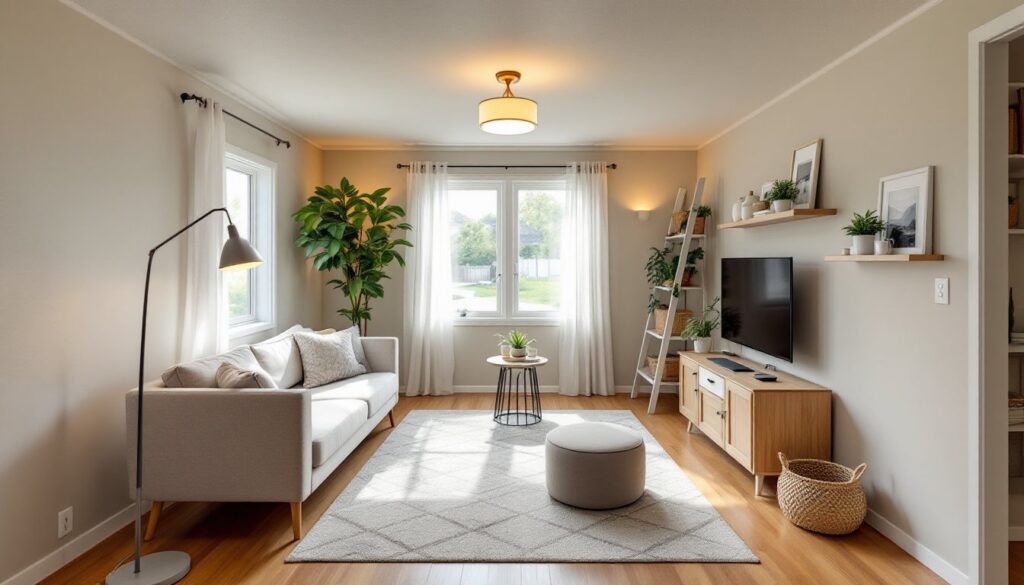
Single wide mobile homes typically measure 14 to 18 feet wide, and the living room is often the hardest-working space in the house, serving as entertainment hub, dining overflow, and central gathering spot. That narrow footprint can feel cramped if not approached strategically. The good news? Thoughtful furniture placement, smart color choices, and creative storage can turn a tight living room into a comfortable, functional space that doesn’t feel like a compromise. This guide walks through practical ideas to maximize every square foot without a full gut job or contractor invoice.
Table of Contents
ToggleKey Takeaways
- Single wide mobile home living room ideas rely on strategic furniture placement and smart color choices to maximize the typically 120–224 square foot space without extensive renovations.
- Choose apartment-size sofas (60–72 inches), armless accent chairs, and furniture with exposed legs to preserve floor space and create visual breathing room in narrow layouts.
- Light, neutral wall colors and monochromatic color schemes reflect light and eliminate visual breaks, while accent walls work best on the shortest wall to add depth without closing in the space.
- Vertical storage solutions like floating shelves, corner units, and wall-mounted media consoles keep floors clear and make rooms feel larger than they actually are.
- Layered lighting with overhead fixtures, floor lamps, and wall sconces compensates for limited natural light and prevents the cave-like feel common in single wide living rooms.
- Paint and peel-and-stick alternatives offer budget-friendly updates that transform dated paneling or dingy walls in a single weekend for under $100.
Understanding Single Wide Mobile Home Living Room Layouts
Most single wide living rooms run 10 to 14 feet wide by 12 to 16 feet long. That’s roughly 120 to 224 square feet, smaller than many primary bedrooms in stick-built homes. Windows are often limited to one or two walls, and ceiling height typically caps at 7 to 8 feet, compared to the standard 8 to 9 feet in conventional construction.
Traffic flow is the first consideration. Mobile homes usually feature a linear layout: front door, living room, kitchen, then bedrooms down a hallway. The living room becomes a pass-through, so furniture can’t block the main corridor. Measure your clearances, leave at least 30 to 36 inches of walking space between furniture pieces and walls.
Check for structural limitations before mounting anything heavy. Mobile home walls use thinner studs (often 2x3s instead of 2x4s) spaced 16 or 24 inches on center, with vinyl-on-gypsum (VOG) or thin paneling instead of drywall. Use a stud finder and toggle anchors rated for your wall type. Avoid mounting heavy shelving or TVs directly into paneling without hitting a stud.
Identify your focal point, usually a window or where the TV will go, and orient seating around it. In a narrow room, arranging furniture along the longer walls (rather than floating pieces in the center) preserves floor space and keeps sightlines open.
Smart Furniture Selection for Compact Living Rooms
Scale matters more in a single wide than in any traditional home. A standard three-seat sofa runs 84 to 96 inches long, that’s often more than half your wall length. Instead, look for apartment-size sofas (60 to 72 inches) or loveseats paired with a couple of armless accent chairs. Armless designs shave 6 to 10 inches off each side, making a noticeable difference in tight quarters.
Multipurpose furniture earns its keep. Ottoman coffee tables with storage inside, sleeper sofas for guests, and nesting tables that tuck away when not needed all reduce clutter without sacrificing function. Avoid bulky recliners unless they’re wall-hugger models that need only 4 to 6 inches of clearance instead of the usual 12 to 18.
Go vertical whenever possible. Tall, narrow bookcases (12 to 16 inches deep) take up less floor space than wide, squat units. Wall-mounted media consoles free up floor area and make vacuuming easier. If you’re mounting a TV, use a low-profile tilting or fixed mount rather than a full-motion arm, mobile home walls can handle the former with proper anchoring, but articulating arms add torque that thin studs struggle with.
Choose furniture with exposed legs. Sofas and chairs that sit on legs (rather than skirted bases) create visual breathing room and make the floor plane feel larger. A few extra inches of visible floor trick the eye into reading the room as more spacious.
Color Schemes That Open Up Small Spaces
Light, neutral walls reflect more light and push boundaries outward visually. White, soft gray, greige, and pale beige are reliable base colors. A gallon of quality interior paint covers roughly 350 to 400 square feet, so one gallon is usually enough for a single wide living room with one coat (always use primer first, especially over dark paneling or VOG).
If all-white feels too sterile, try a monochromatic scheme in soft blues, warm taupes, or muted greens. Keeping walls, trim, and ceiling in the same color family eliminates visual breaks that chop up the room. Paint the ceiling the same shade as the walls, or one step lighter, to blur the boundaries and add perceived height.
Accent walls can work, but use them carefully. A darker or bolder color on the shortest wall (usually an end wall) can add depth without closing in the space. Avoid dark colors on long walls in narrow rooms: they’ll make the space feel like a bowling alley.
Carry your color palette into furnishings. A sofa in a similar tone to the walls won’t break up the sightline. Add contrast and personality with throw pillows, artwork, and rugs in deeper or brighter hues, these are easy to swap out and less commitment than a navy sofa in a 12-foot-wide room. Experts at Apartment Therapy often recommend layering neutrals with texture (linen, wool, wood) to keep a light palette from feeling flat.
Creative Storage Solutions to Maximize Every Inch
Clutter is the enemy of small spaces. In a single wide, every magazine stack and stray remote chips away at your usable area. Built-in or wall-mounted storage keeps floors clear and surfaces uncluttered.
Floating shelves are a low-cost, high-impact solution. Install them above the sofa, flanking windows, or in dead corners. Use wood brackets or heavy-duty metal brackets anchored into studs, drywall anchors alone won’t hold much weight in mobile home walls. Keep shelves shallow (8 to 10 inches) so they don’t jut into the room.
Behind-the-sofa storage is underutilized. A narrow console table (10 to 12 inches deep) behind a sofa that floats a few inches off the wall can hold lamps, books, or baskets without taking up extra floor space. If your sofa backs up to a wall, consider swapping it for a storage bench or low cabinet that serves as a sofa table and hides board games, blankets, or seasonal decor.
Corners are prime real estate. Corner shelves, ladder shelves, or tall corner cabinets turn awkward angles into vertical storage. A floor-to-ceiling corner unit can hold as much as a short bookcase but uses a fraction of the footprint. Organizers featured on Real Simple often highlight modular cube systems that adapt to odd layouts and tight corners.
Don’t overlook the space under furniture. Storage ottomans, coffee tables with drawers, and sofas with under-seat storage add hidden capacity. Baskets or bins under console tables keep clutter out of sight while staying accessible.
Lighting Strategies for Brighter, More Spacious Rooms
Single wide living rooms often suffer from limited natural light, one or two small windows and low ceilings create a cave-like feel. Layered lighting (ambient, task, and accent) compensates for what the sun can’t provide.
Start with overhead lighting. Many mobile homes come with a single ceiling-mounted fixture, often a builder-grade dome that casts harsh, flat light. Swap it for a semi-flush mount or small chandelier with multiple bulbs (40 to 60 watts equivalent LED each). If the existing electrical box is off-center or poorly placed, a ceiling fan with an integrated light kit can improve both illumination and airflow. Always turn off power at the breaker before working on electrical fixtures.
Add floor lamps and table lamps in at least two corners. This spreads light sources around the room and reduces shadows. Lamps with opaque or light-colored shades diffuse light upward and outward, making the room feel larger. Arc floor lamps are ideal for small spaces, they reach over furniture to provide overhead-style light without taking up floor space.
Wall sconces save surface area and add ambiance. Install them flanking a media console, above floating shelves, or on either side of a focal wall. Make sure they’re wired properly, if you’re not comfortable working with electrical, hire a licensed electrician. Mobile homes fall under the National Electrical Code (NEC), and any modifications should meet local codes and manufacturer specs.
Maximize natural light by keeping window treatments simple and light. Sheer curtains, roller shades, or light-filtering blinds let daylight in without visual bulk. Avoid heavy drapes or dark colors that absorb light. Hang curtain rods above the window frame and extend them a few inches beyond each side to make windows appear larger.
Budget-Friendly DIY Updates for Instant Impact
Big transformations don’t require big budgets. A few targeted DIY projects can refresh a single wide living room over a weekend.
Paint is the lowest-cost, highest-impact upgrade. Covering dated paneling or dingy walls with a fresh coat of primer (use a stain-blocking formula like Zinsser B-I-N or Kilz if covering dark wood or nicotine stains) followed by two coats of a quality latex paint can completely change the feel of the room. A gallon of mid-grade paint runs $30 to $50 and covers that 120- to 200-square-foot living room with enough left for touch-ups.
Peel-and-stick options offer renter- or budget-friendly alternatives. Peel-and-stick wallpaper, shiplap panels, or vinyl plank flooring can be installed without special tools or permanent changes. Just make sure surfaces are clean and smooth before applying, peel-and-stick products telegraph every imperfection. DIY enthusiasts at Young House Love have documented multiple mobile home makeovers using removable materials with impressive results.
Replace cabinet hardware, light switch covers, and outlet plates. Swapping builder-grade almond plastic for modern white, black, or brushed nickel costs under $20 and takes less than an hour. It’s a small detail that makes the whole room feel more intentional.
Crown molding or baseboard upgrades add architectural interest. Mobile homes typically use thin, plain trim. Installing 3- to 4-inch baseboards and simple crown molding (even lightweight polyurethane versions) creates the illusion of higher ceilings and more finished construction. Use a miter saw for clean corner cuts, a circular saw works, but the learning curve is steeper and waste is higher.
If your living room connects to the kitchen or hallway, consider extending changes into those areas to create flow. Homes with thoughtful design across spaces feel larger than the sum of their parts, similar to strategies highlighted in discussions about home extension ideas where continuity matters.
Conclusion
A single wide living room will never be a grand two-story great room, but it doesn’t need to be. Smart furniture, intentional color, creative storage, and good lighting turn tight quarters into a space that works hard and feels good. Most of these ideas cost less than a weekend’s labor and a few trips to the hardware store. Start with one or two changes, see what clicks, and build from there.