
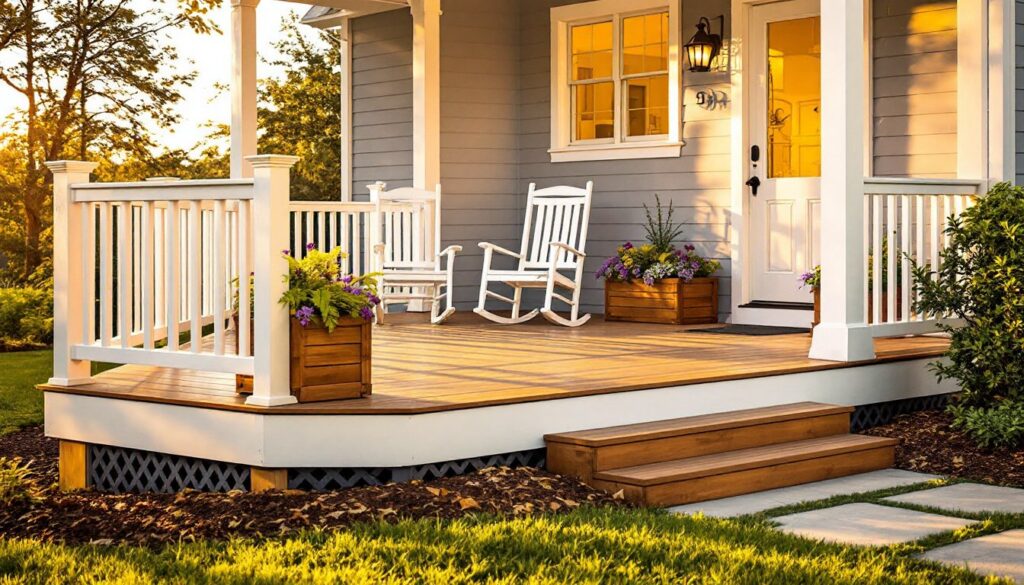
A front porch deck does more than just provide a place to stand, it frames the entire character of a home. Whether someone’s working with a narrow stoop or a sprawling veranda, the right materials, layout, and details can turn a flat, forgettable entry into an inviting focal point. The good news? Front porch decks don’t require the same engineering complexity as elevated rear decks, but they do demand thoughtful design. From material choices and board patterns to railings and built-ins, every decision affects both curb appeal and long-term maintenance. This guide breaks down practical, proven ideas that work for real homes and real budgets.
Table of Contents
ToggleKey Takeaways
- Front porch deck ideas range from classic wood and low-maintenance composite to creative two-tone patterns, each offering different benefits for curb appeal and long-term maintenance.
- Wood decking requires sealing or staining every 2–3 years, while capped composite boards eliminate this cycle, making them ideal for homeowners seeking minimal upkeep.
- Small front porch decks can feel larger with diagonal layouts, bordered inset patterns, or flush-mount post bases that maximize usable space without sacrificing design impact.
- Railing choices—from traditional wood balusters to cable systems and glass panels—define a porch’s personality while meeting local building code requirements.
- Built-in benches and planter boxes add functionality and visual interest while keeping a front porch deck organized and cohesive with the home’s overall design.
Classic Wood Deck Designs for Timeless Front Porch Appeal
Wood remains the go-to choice for homeowners who want warmth, texture, and traditional appeal. Pressure-treated pine is the most budget-friendly option, typically running $2–$4 per board foot depending on grade and region. It works well for front porches that stay low to the ground (under 30 inches) and don’t require extensive framing. For something more refined, cedar and redwood offer natural rot resistance and richer color tones, though they command $5–$8 per board foot.
Wood decks need proper prep and maintenance to hold up. That means sealing or staining every 2–3 years, especially on surfaces exposed to full sun or driving rain. Use a solid or semi-transparent exterior stain rated for foot traffic, clear sealers alone won’t prevent UV degradation. For front porches, a 5/4×6 decking board (actual dimensions 1″ x 5.5″) is standard, providing a finished thickness of one inch. Always install boards bark-side up to minimize cupping.
One classic layout: running deck boards perpendicular to the house with a picture-frame border in a contrasting stain or wood species. This adds definition without requiring complex cuts. If the porch is wider than 12 feet, consider a double-rim joist to support the perimeter and give the border a clean, professional look. Use galvanized or coated deck screws rated for exterior use, never drywall screws, which will corrode and stain the wood.
Modern Composite Decking Options for Low-Maintenance Front Porches
Composite decking eliminates the stain-and-seal cycle, making it a strong choice for homeowners who’d rather skip weekend maintenance. Capped composite boards, which have a protective polymer shell over a wood-fiber core, resist fading, staining, and mold better than first-generation composites. Expect to pay $4–$8 per linear foot for quality brands, installed.
Most composite manufacturers offer grooved-edge boards designed for hidden fastener systems. These clips lock into the board edges and screw into the joists, leaving a clean surface with no visible screws. The result is a sleek, modern look that pairs well with contemporary home styles. Hidden fasteners also reduce the chance of water pooling around screw heads, which can lead to staining on some composite formulas.
Composite performs best on front porches with adequate ventilation underneath. Trapped moisture can cause mildew on any decking material, but composites with wood fiber are especially vulnerable if airflow is blocked. If the porch sits close to grade, install lattice panels or leave a 4–6 inch gap along the perimeter to promote cross-ventilation. Also, note that darker composite colors absorb more heat, important if the porch gets full afternoon sun and people walk barefoot.
Small Front Porch Deck Ideas That Maximize Space
A shallow front porch (6 feet deep or less) can still deliver big impact with smart layout choices. Diagonal decking makes a narrow porch feel wider by drawing the eye across the space instead of straight to the door. Run boards at a 45-degree angle to the house, but be prepared for more cutting and waste, plan on 10–15% extra material.
For porches that double as landing zones, consider a bordered inset pattern: frame the perimeter with boards running parallel to the house, then fill the center with perpendicular or diagonal boards. This visually expands the footprint and creates a natural spot for a doormat or potted plants. Avoid busy patterns on very small porches: too much going on can make the space feel cluttered.
When working with limited square footage, every inch counts. Flush-mount post bases keep railing posts tight to the deck edge, maximizing usable space. If the porch is low enough (typically under 30 inches off grade), check local codes, many jurisdictions don’t require railings at that height, which opens up the sightlines and makes a small porch feel less boxed in. Always verify with the local building department before skipping railings.
Two-Tone Decking and Creative Pattern Layouts
Mixing two decking colors or materials adds visual interest without complicated carpentry. A common approach: use a darker border with a lighter field, or reverse it for a bold frame. Composite manufacturers often offer complementary color lines designed to pair, think gray borders with warm brown centers, or charcoal frames around lighter driftwood tones.
For a more detailed look, try a herringbone or chevron pattern. Both require a robust substructure with blocking between joists to support the angled board ends. Herringbone (boards meet at 90 degrees in a staggered zigzag) delivers classic elegance but generates significant waste. Chevron (boards meet at a point to form a continuous V) is cleaner but demands precision cuts, a miter saw or sliding compound saw is essential.
Another option that’s easier to execute: a picture-frame with centerline accent. Run the perimeter boards as a border, fill the main field with perpendicular boards, then add a single contrasting board down the centerline. It’s a subtle upgrade that requires only one extra cut per board and draws inspiration from traditional country-style porch designs.
Railing Styles That Enhance Your Front Porch Deck
Railings do more than meet code, they define a porch’s personality. Wood balusters with a painted or stained top and bottom rail remain a safe, traditional choice. Standard spindle spacing is 4 inches on center (measured from the center of one baluster to the next), but check the IRC: most jurisdictions require gaps no wider than 4 inches to prevent small children from slipping through.
For a more open feel, cable railing systems offer near-invisible safety. Horizontal stainless steel cables (typically 1/8″ or 3/16″ diameter) run through drilled posts, spaced 3 inches apart vertically. Cable rail works especially well on modern or minimalist porches, but it requires sturdy posts, 4×4 pressure-treated or steel, with proper blocking and tensioning hardware. Don’t attempt cable rail with lightweight composite posts unless the manufacturer explicitly rates them for cable tension.
Glass panel railings provide an unobstructed view and a high-end look, using tempered safety glass secured in aluminum or vinyl channels. They’re pricier ($100–$200 per linear foot installed) but nearly maintenance-free and ideal for porches with scenic views or architectural details worth showcasing. One caution: glass shows every smudge and raindrop, so plan on regular cleaning. Projects with more complex design elements, such as hot tub deck layouts, often use similar railing solutions to maintain sightlines.
Built-In Seating and Planter Box Ideas for Front Porches
Built-in benches maximize seating without crowding a porch with loose furniture. A simple L-shaped bench anchored to the deck framing and house wall uses the same decking material as the floor for a cohesive look. Frame the bench with 2×4 or 2×6 lumber, securing it to the rim joist and adding blocking for stability. Aim for a seat height of 16–18 inches and a depth of at least 16 inches for comfort. Add a hinged lid, and the bench becomes hidden storage for seasonal decor or garden tools.
Planter boxes built into the deck perimeter bring greenery to eye level and soften hard lines. Use rot-resistant lumber (cedar, redwood, or pressure-treated) and line the interior with heavy-mil plastic or pond liner to protect the wood from constant moisture. Drill drainage holes in the bottom and elevate the box slightly on blocking to prevent water from pooling underneath. For a polished finish, cap the planter edges with 1×6 or 2×6 trim boards, mitered at the corners.
Many modern outdoor living ideas incorporate multi-functional built-ins that blend seating, storage, and planters. When integrating planters, remember that soil and water add significant weight, consult a structural engineer if adding large built-in planters to an existing deck not originally designed for the load. On front porches, keep plantings low enough that they don’t obstruct sightlines or windows, especially near entry doors.
Conclusion
A well-planned front porch deck improves curb appeal, adds usable square footage, and sets the tone before anyone steps inside. Whether choosing classic wood, low-maintenance composite, or a mix of both, the key is matching materials and design to how the space will actually be used, and maintained. With solid framing, thoughtful details, and realistic expectations about upkeep, a front porch deck becomes one of the hardest-working features of a home.


