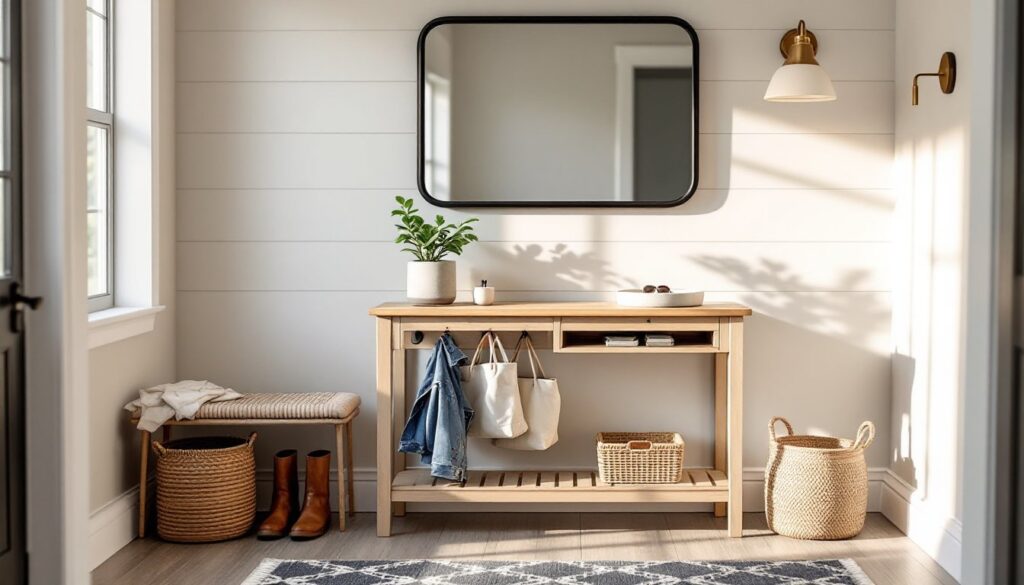
The entryway is the hardest-working square footage in any home. It’s where wet boots land, keys get tossed, and first impressions form before guests even clear the threshold. Yet most homeowners treat it as an afterthought, a pass-through zone with a lonely hook and a pile of shoes. A well-designed entry doesn’t require a gut renovation or a fat budget. With smart storage, intentional lighting, and a few strategic upgrades, even a cramped foyer or a direct-to-living-room layout can become functional, welcoming, and worth showing off.
Table of Contents
ToggleKey Takeaways
- Well-designed home entryway ideas focus on maximizing storage, lighting, and durable materials to create a functional space that handles daily traffic and makes a strong first impression.
- Vertical storage solutions like peg rails, floating shelves, and built-in benches are essential for small entryways, keeping floors clear while maintaining load capacity when anchored properly into studs.
- Layered lighting with overhead fixtures, wall sconces, and strategically placed mirrors transforms dim entryways into welcoming spaces while making them feel larger and brighter.
- Durable flooring options like luxury vinyl plank (LVP) and slip-resistant tile outperform traditional hardwood in high-traffic entry zones, paired with low-pile rugs and non-slip pads to trap dirt before it spreads.
- Statement furniture pieces such as benches, console tables, and coat racks anchor the entryway’s purpose while providing practical storage and seating without compromising traffic flow.
- Paint color, wall treatments, and minimal decor like artwork and greenery add personality and protect surfaces while keeping the space functional and easy to maintain.
Why Your Entryway Deserves More Attention
Functionally, the entryway is a mudroom, drop zone, and security checkpoint rolled into one. It’s where outdoor grime stops and indoor living begins. Without dedicated storage or a plan for daily traffic, clutter spreads to the rest of the house. Coats migrate to dining chairs. Mail piles up on counters. Shoes become trip hazards.
From a design standpoint, the entry sets the tone. It’s the first thing you see when you walk in tired from work, and the last thing guests remember when they leave. A cohesive entry signals that the rest of the home is thoughtfully maintained.
Structurally, this is also a high-wear zone. Floors take a beating from gravel, salt, and moisture. Walls near the door get scuffed by bags and strollers. If you’re planning broader home renovation ideas, the entryway is a smart place to start, it’s small enough to finish in a weekend but visible enough to feel like a real upgrade.
Storage Solutions That Maximize Small Entryway Spaces
Narrow entries and open-plan layouts demand vertical thinking. Wall-mounted solutions keep the floor clear and make the space feel larger.
Peg rails or modular hook systems mounted at 60–66 inches (standard coat hook height) handle jackets, bags, and hats without the bulk of a coat closet. Look for rails with a 1×4 or 1×6 backing board anchored into studs for load capacity, drywall anchors alone won’t hold a winter coat collection.
Floating shelves with cubbies offer dual-purpose storage. A 12-inch-deep shelf mounted above hooks can hold baskets for gloves and mail, while cubbies below corral shoes. Ensure shelves are fastened to studs or blocking: a shelf loaded with boots can exceed 50 pounds.
Slim console tables (as narrow as 10–12 inches deep) fit in tight spaces and provide a surface for keys and a tray. Choose designs with a lower shelf or drawer for hidden storage. If the entryway opens directly into a living area, a console acts as a visual divider.
Built-in benches with lift-top storage work well in slightly wider entries. A 16–18 inch seat depth is comfortable for pulling on shoes, and the hidden compartment below swallows seasonal items. Frame the bench between 2×4 walls, then top with ¾-inch plywood and foam cushion. Hinge the top with piano hinges for smooth operation and safety.
Over-the-door organizers are renters’ best friends. Canvas or metal racks hang on the back of the entry door and hold shoes, umbrellas, or dog leashes without a single screw hole. Weight capacity varies, check that the door hinges can handle the load.
Creating Visual Impact With Lighting and Mirrors
Entryways are often dim and windowless. Layered lighting solves that and adds architectural interest.
Start with overhead ambient lighting. A flush-mount or semi-flush ceiling fixture works in entries with standard 8-foot ceilings. For taller ceilings or two-story foyers, a pendant or chandelier scaled to the space makes a statement. As a rule of thumb, the fixture diameter in inches should equal the sum of the room’s length and width in feet (e.g., a 5×8 entry fits a fixture around 13 inches wide).
Wall sconces flanking a mirror or console add task lighting and symmetry. Mount sconces 60–66 inches to the center of the fixture for eye-level illumination. If you’re running new electrical, install a 3-way switch at both the entry door and the interior hallway for convenience. Electrical work involving new circuits typically requires a permit and inspection, check local codes.
Mirrors amplify natural light and make small entries feel double their size. A 36×48 inch mirror or larger creates drama without overwhelming the wall. Secure heavy mirrors with D-rings and picture wire rated for the mirror’s weight, or use French cleats for extra stability. Mount the bottom edge at least 48 inches from the floor so it’s useful for a quick check before heading out.
Exploring modern lighting layouts and mirror placements can inspire designs that suit various architectural styles, from farmhouse to minimalist.
Flooring and Rug Choices for High-Traffic Entryways
Entryway floors endure more abuse than any other surface in the house. Material choice matters.
Luxury vinyl plank (LVP) is the DIY favorite, waterproof, scratch-resistant, and easy to install as a floating floor over existing subfloor. Look for products with a 20-mil or thicker wear layer for commercial-grade durability. LVP handles snow melt, muddy paws, and dropped keys without flinching.
Ceramic or porcelain tile is the gold standard for durability but requires more skill to install. Use slip-resistant tiles (rated 0.6 COF or higher) to prevent falls when wet. Grout lines should be sealed annually to resist staining. If you’re tiling over a wood subfloor, install a cement backer board first to prevent tile cracking from subfloor flex.
Engineered hardwood works if you avoid standing water and maintain it properly. It’s more stable than solid hardwood in fluctuating humidity. Finish with a polyurethane topcoat (water-based for faster drying, oil-based for deeper durability) to resist scratches.
Area rugs and runners trap dirt before it spreads. Choose low-pile synthetic fibers (polypropylene or nylon) that rinse clean with a hose. A 3×5 or 4×6 rug fits most standard entries. Use a non-slip rug pad underneath, especially critical on hard surfaces. Cheap pads disintegrate and leave residue: spend a few extra bucks on a felt-and-rubber composite pad.
Mats outside the door also help. A coir or rubber scraper mat catches the worst of the mud before it crosses the threshold.
Statement Furniture Pieces That Define Your Entry
Furniture anchors the entryway and signals its purpose. Even in a tiny space, one well-chosen piece can transform the feel.
Benches are the most practical option. A hall bench with storage cubbies or a simple wooden bench with a lower shelf gives you a place to sit while pulling on boots and a spot to stash bags. For small entries, look for benches 36–48 inches wide. Wider entries can handle a 60-inch bench without crowding the walkway. Ensure there’s at least 36 inches of clearance for traffic flow, that’s code-minimum for hallways in most jurisdictions.
Console tables bring style and function. Narrow consoles (10–14 inches deep) slip against a wall and hold essentials, keys, mail, a catch-all tray. Tables with drawers or baskets keep clutter out of sight. If the entryway doubles as a pass-through to other rooms, a console can subtly mark the boundary without blocking sightlines.
Coat racks and hall trees provide vertical storage for homes without a coat closet. Freestanding designs move with you if you rent. Look for solid wood or metal construction with a wide base to prevent tipping when loaded. Some models include a built-in bench and umbrella tray at the base.
Accent chairs make sense in larger foyers but skip them in tight spaces, they’ll just collect junk. If you have room, a single upholstered chair in a wipeable fabric (think performance linen or faux leather) adds a welcoming touch.
For inspiration on furniture pairings and layouts that balance form with function, browsing resources like interior design galleries can offer real-world examples from completed projects.
Personalizing Your Entryway With Decor and Color
Once the functional bones are in place, decor adds personality without sacrificing utility.
Paint color sets the mood. Dark, saturated tones (navy, charcoal, forest green) create a cozy, enclosed feel and hide scuffs. Light neutrals (warm white, greige, soft taupe) open up cramped spaces and reflect light. Use satin or semi-gloss finish on trim and doors, it’s more washable than flat paint and holds up to repeated cleaning. If the entryway lacks natural light, avoid stark white: it can read as dingy. Instead, choose warm whites with a slight cream or beige undertone.
Wall treatments add texture. Board-and-batten, shiplap, or a simple chair rail at 32–36 inches protects walls from shoe scuffs and bag bumps while adding visual interest. Install with construction adhesive and 18-gauge brad nails into studs for a secure hold. Paint the paneling in a contrasting color for a two-tone effect.
Artwork and hooks personalize without clutter. A single large piece (24×36 inches or bigger) makes more impact than a gallery wall in a small entry. Hang art so the center is at 57–60 inches (standard gallery height). Avoid glass-fronted frames near the door, they’re breakage hazards.
Greenery softens hard surfaces. Choose low-maintenance plants that tolerate low light if the entry is interior-facing. Snake plants, pothos, or ZZ plants survive in dim conditions. Use heavy ceramic or concrete pots that won’t tip if bumped.
Trays and bowls corral small items. A ceramic or wood tray on the console becomes the designated spot for keys, sunglasses, and wallets. It contains the visual clutter.
For curated decor ideas that match various aesthetics, exploring platforms like home design inspiration can help refine your vision before committing to purchases.
Seasonal swaps keep the entry feeling fresh. A wreath on the door, a bowl of seasonal filler on the console, or swapped-out throw pillows on the bench take five minutes and cost almost nothing if you rotate what you already own.
Conclusion
A functional, well-designed entryway doesn’t happen by accident. It takes planning, the right materials, and a clear understanding of how the space gets used daily. Focus on durable surfaces, smart storage, and lighting that works morning and night. Skip the fluff and invest in pieces that solve real problems, benches that hold boots, hooks that don’t rip out of drywall, rugs that actually trap dirt. The result is a space that works as hard as it looks good.