
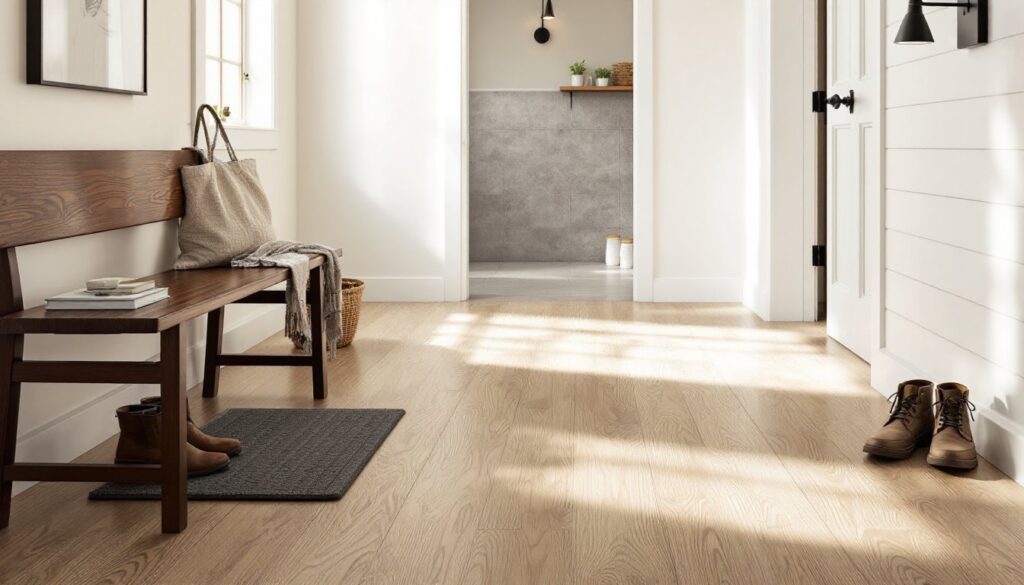
Your entryway floor takes the brunt of daily abuse, muddy boots, dropped groceries, pet claws, and everything else the world tracks in. But it’s also the first thing guests see when they walk through the door. The right flooring choice balances durability with visual appeal, setting the tone for the rest of your home without folding under real-world wear. Whether you’re replacing a worn-out surface or building new, understanding your options helps you avoid costly mistakes and pick a material that’ll still look good five years from now.
Table of Contents
ToggleKey Takeaways
- Entryway flooring ideas should prioritize durability and moisture resistance since entries endure constant foot traffic, outdoor debris, and temperature fluctuations more than other rooms in your home.
- Luxury vinyl plank (LVP) and porcelain tile offer the best balance of style, durability, and moisture resistance, making them ideal choices for high-traffic entryways exposed to wet or muddy conditions.
- Hardwood flooring works well in protected entryways with covered porches, but requires site-finished polyurethane and a moisture barrier to prevent warping and water damage.
- Proper subfloor preparation—including levelness checks and moisture barriers—is critical regardless of material choice; variations over 1/4 inch in 10 feet require correction before installation.
- Budget-friendly options like sheet vinyl, concrete staining, and engineered wood can deliver solid performance, but consider total cost of ownership since replacement frequency affects long-term expenses.
- Climate and traffic patterns should drive your material selection; high-traffic households need hard surfaces like porcelain tile or rigid-core LVP, while cold climates benefit from radiant heating under tile or LVP.
Why Your Entryway Floor Matters More Than You Think
Entryways sit at the intersection of form and function. Unlike living room floors that see sock-clad feet and the occasional spill, entry floors endure constant foot traffic, outdoor debris, temperature swings, and moisture. A poorly chosen material will show scratches, stains, or water damage within months.
From a structural standpoint, the entryway often transitions between flooring types, hardwood in the main living area, tile in the kitchen. This makes it a natural place to introduce a durable transition material that complements both zones without creating a tripping hazard or visual clash.
Beyond durability, the entry sets expectations. A polished stone floor signals formality. Wide-plank hardwood reads warm and traditional. Patterned tile adds personality. Choosing the wrong material won’t just wear out faster, it’ll feel off every time someone walks in.
Durable and Timeless: Hardwood Flooring for Entryways
Hardwood remains a top pick for entryways in homes with covered porches or minimal direct weather exposure. Species matter: white oak and hickory rank higher on the Janka hardness scale than red oak or pine, making them better suited for high-traffic zones.
Finish is just as critical as species. Site-finished polyurethane (applied after installation) offers better moisture resistance than prefinished boards with micro-beveled edges where water can seep in. For entryways, skip matte finishes, they show scuffs faster. A satin or semi-gloss sheen hides minor wear and simplifies cleaning.
One caveat: hardwood doesn’t play well with standing water. If your entry gets soaked from rain or snow melt, you’ll see cupping or warping. Lay down a boot tray or large mat, and make sure the subfloor has a proper moisture barrier. Also, direct sunlight through sidelights can fade the finish over time, so consider UV-protective window film or area rugs in bright spots.
Installation typically runs $6–$12 per square foot depending on species and labor rates, but that’s before factoring in site finishing. If you’re handy with a nailer and have access to a miter saw for border cuts, this is a manageable DIY, just rent a floor sander for the final finish.
Luxury Vinyl Plank: The Perfect Balance of Style and Practicality
Luxury vinyl plank (LVP) has shed its reputation as a budget knockoff. Modern LVP mimics hardwood and stone with embossed textures and realistic grain patterns, and it outperforms both in moisture resistance and impact durability.
Look for rigid core LVP (also called SPC or WPC) with a wear layer of at least 12 mil for residential entryways. Thicker wear layers resist scratches from pet claws and grit. The rigid core prevents telegraphing of subfloor imperfections and adds dimensional stability, meaning it won’t expand or contract as much with temperature swings.
LVP installs as a floating floor with click-lock edges, so no glue or nails. You’ll need a vinyl cutter or utility knife for cuts, and an underlayment with a moisture barrier if you’re installing over concrete. Most manufacturers recommend acclimating planks in the room for 48 hours before install, skip this and you might see gaps or buckling.
Cost runs $3–$7 per square foot installed, and the material holds up well against the kind of wet, muddy conditions that would ruin hardwood. It’s also warmer underfoot than tile, which matters in colder climates.
Tile Entryways: Ceramic, Porcelain, and Natural Stone Options
Tile is the workhorse of entryway flooring. It’s waterproof, scratch-resistant, and available in endless styles. But not all tile is equal.
Porcelain tile outperforms ceramic in freeze-thaw durability and moisture absorption, making it the smarter choice for entries with exterior doors in cold climates. Look for a PEI rating of 4 or 5 (Porcelain Enamel Institute scale), which indicates high traffic tolerance. Textured or matte finishes provide better traction when wet than polished surfaces.
Natural stone, slate, travertine, or limestone, adds a high-end look but requires more maintenance. Stone is porous, so it needs sealing every 1–2 years to resist stains from road salt and mud. Slate offers natural slip resistance, while polished marble (beautiful as it is) becomes a skating rink when wet. Don’t use it in an entry unless you want liability issues.
Tile installation is a solid intermediate DIY if you’ve got a wet saw and a level subfloor. Use a modified thinset for porcelain and an uncoupling membrane like Schluter-DITRA over wood subfloors to prevent cracking from flex. Grout choice matters too: epoxy grout resists staining far better than standard cement grout and holds up to frequent mopping.
Costs vary widely. Ceramic starts around $2–$5 per square foot, porcelain runs $3–$10, and natural stone can hit $10–$20+ depending on the slab. Professional installation adds $5–$10 per square foot depending on complexity and region. For inspiration on how designers combine tile patterns and layouts, check examples that balance aesthetics with slip resistance.
Budget-Friendly Flooring Solutions That Don’t Sacrifice Style
Not every project has a four-figure flooring budget, and that’s fine. Several materials deliver solid performance without the premium price tag.
Sheet vinyl gets a bad rap, but modern products like Tarkett or Armstrong luxury sheet vinyl offer waterproof, low-maintenance surfaces with surprisingly realistic patterns. Installation is straightforward: roll it out, trim to fit, and glue down the perimeter. A 12′ x 12′ entryway costs under $150 in material, and you can knock it out in an afternoon with a utility knife and a J-roller.
Peel-and-stick vinyl tiles are even easier, no adhesive mixing, no mortar. Quality varies wildly, so stick with brands that advertise a wear layer and read reviews. These won’t last a decade, but they’ll give you a few good years and make a rental or flip look finished.
Concrete staining or painting works if you’ve got an exposed slab. After thorough cleaning and etching with muriatic acid (wear gloves, goggles, and a respirator), apply an acid-based stain or epoxy paint. Seal with a clear urethane topcoat for durability. Total material cost often stays under $200, and the industrial look pairs well with modern or minimalist interiors. According to guidance from home improvement cost resources, surface prep and sealant quality drive the longevity of concrete finishes more than the stain itself.
Laminate and Engineered Wood Alternatives
Laminate flooring offers the look of hardwood at a fraction of the cost, typically $1–$4 per square foot. Modern AC4 or AC5 rated laminate handles heavy traffic, but it’s not waterproof. Even water-resistant laminate will swell if moisture gets into the core, so avoid it in entries prone to standing water.
Engineered hardwood splits the difference between solid hardwood and laminate. It’s a thin veneer of real wood over a plywood core, giving you authentic grain with better dimensional stability. Most engineered products can’t be refinished more than once or twice due to the thin wear layer, but they install easier than solid wood (many use click-lock systems) and handle humidity swings better.
Both install as floating floors, so no nails or staples. You’ll need a tapping block, pull bar, and underlayment with a vapor barrier. Leave a 1/4-inch expansion gap around the perimeter and cover it with baseboards or quarter-round.
When weighing budget-conscious flooring options, remember that longevity and ease of repair affect total cost of ownership. A $2/sq ft laminate that needs replacement in five years isn’t cheaper than a $5/sq ft LVP that lasts fifteen.
Choosing the Right Flooring for Your Entryway’s Traffic and Climate
Material selection hinges on two factors: how much abuse the floor will take and what weather it faces.
High-traffic households (families with kids, multiple pets, frequent guests) need hard surfaces. Porcelain tile, rigid core LVP, or hardwoods rated above 1200 on the Janka scale hold up best. Softer woods like pine or fir will dent. Laminate, even high-AC-rated, shows wear faster under constant use.
Climate and moisture exposure matter just as much. If your entry opens directly to the elements without a covered porch or vestibule, avoid solid hardwood and laminate. They can’t handle freeze-thaw cycles or prolonged wetness. Tile and LVP are your best bets. In humid regions (coastal areas, the Southeast), engineered wood handles moisture better than solid, but you’ll still need to manage indoor humidity and wipe up spills quickly.
Subfloor condition determines what you can install. Tile requires a stiff, level base, plywood over joists spaced 16 inches on center or a concrete slab. If your subfloor has flex, install an uncoupling membrane or switch to a floating floor like LVP or engineered wood. Always check for levelness with a 4-foot level: variations over 1/4 inch in 10 feet need correction with self-leveling compound.
Finally, consider radiant heating. If you’re installing new flooring and live in a cold climate, adding electric radiant mats under tile or LVP turns a cold entry into a warm, snow-melting zone. Tile conducts heat well: LVP works but insulates slightly. Never install radiant heat under solid hardwood, it’ll dry out and crack. Engineered wood tolerates it if the manufacturer approves.
And don’t skip the basics: use doormats inside and out, apply furniture pads to any benches or coat racks, and keep a small broom or vacuum handy. The best flooring in the world still needs routine care.


